
Blue Sky Luxury Bathrooms · Tamworth
Wet Room Installationin TamworthSeamless, Waterproof, Built to Last
A fully tanked, level-access wet room installed by specialists who understand gradients, drainage, and waterproofing — not guesswork.
★ Specialist waterproofing systems · 20+ years' experience · Full warranty on every installation
20+ Years' Experience
Industry expertise
1000+ Projects
Successfully completed
Full Warranty
On every installation
No Subcontractors
One dedicated team
Free Consultations
No obligation quotes
Typical cost
£6,500 – £13,000
Fully tanked, level-access, supply and fit
Install time
8 – 12 working days
Extra days cover tanking and fall grading
Workmanship warranty
12 months
Tanking systems carry their own manufacturer cover
Building regs
Fall-graded & tanked
Drainage and waterproofing to current standards
What Is a Wet Room and Who Benefits Most?
A wet room is a fully waterproofed bathroom where the shower area is open and level with the rest of the floor — no tray, no step, no enclosure. Water drains through a linear or point drain set into a gently sloped floor, with the entire room tanked to prevent moisture reaching the structure beneath.
Wet rooms are ideal for homeowners who want a contemporary, minimalist aesthetic, those with mobility concerns who need step-free access, or anyone looking to maximise usable space in a smaller bathroom. They are also increasingly popular in master ensuites where the open-plan shower adds a sense of luxury.
At Blue Sky Luxury Bathrooms, wet room installation is one of our specialist services. Unlike a standard shower installation, a wet room requires precise gradient calculations, professional-grade waterproofing, and careful material selection to function correctly and remain watertight for decades.
We install wet rooms across Tamworth, Lichfield, Sutton Coldfield, Burton-on-Trent, Nuneaton, Birmingham, and the wider West Midlands. Every project begins with a detailed survey to assess your floor structure, drainage options, and design preferences.
Real Client Homes
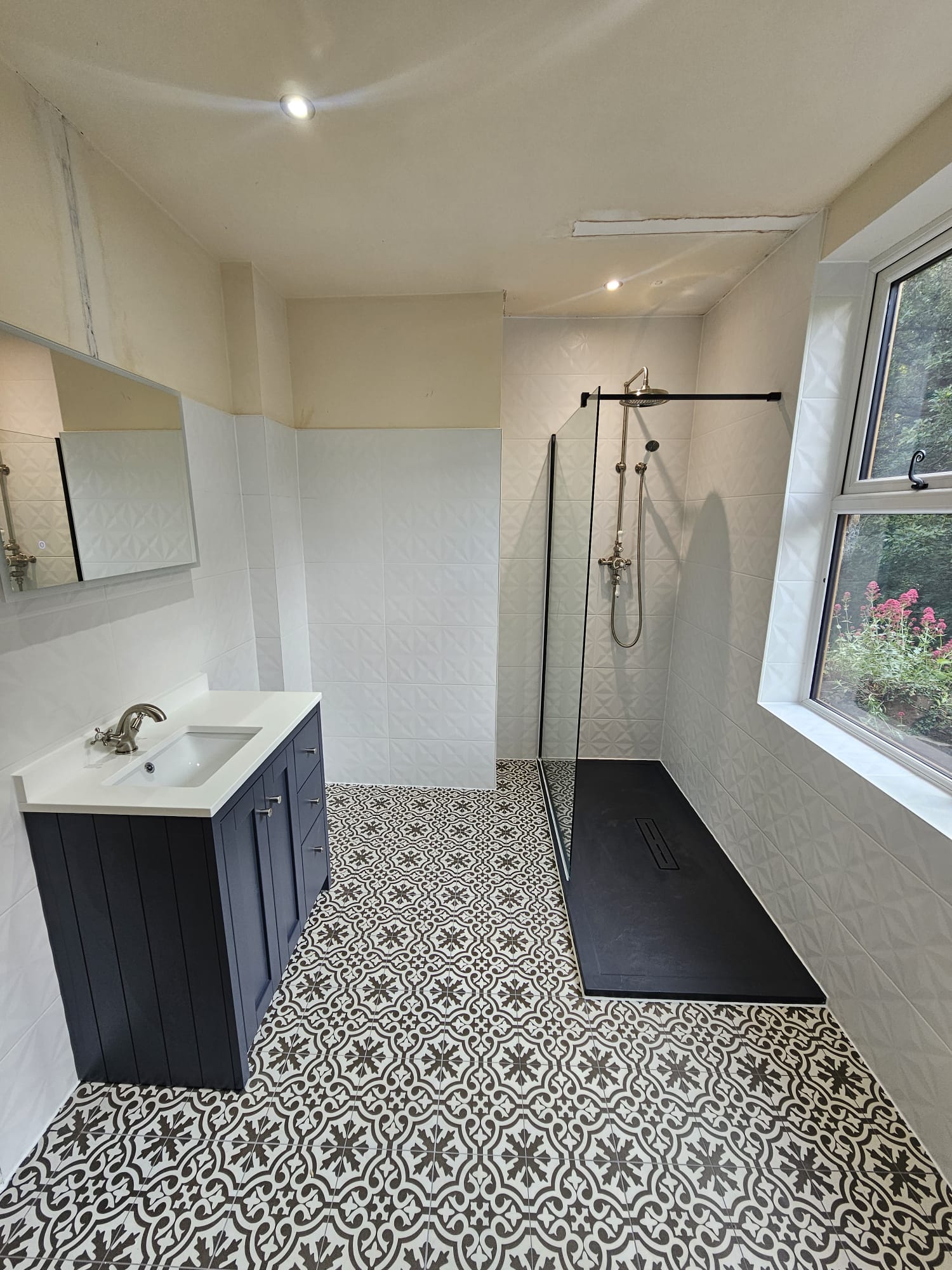
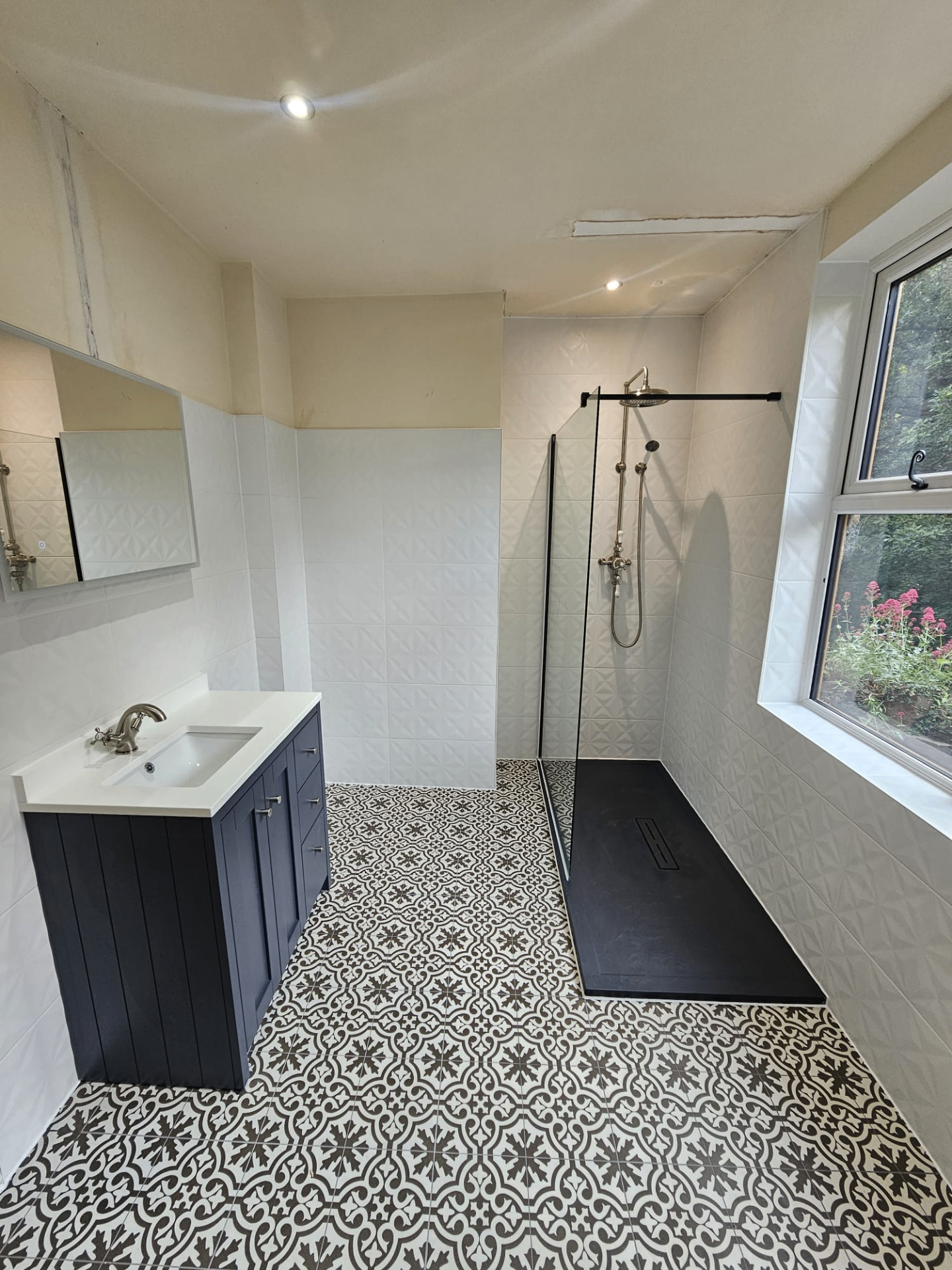
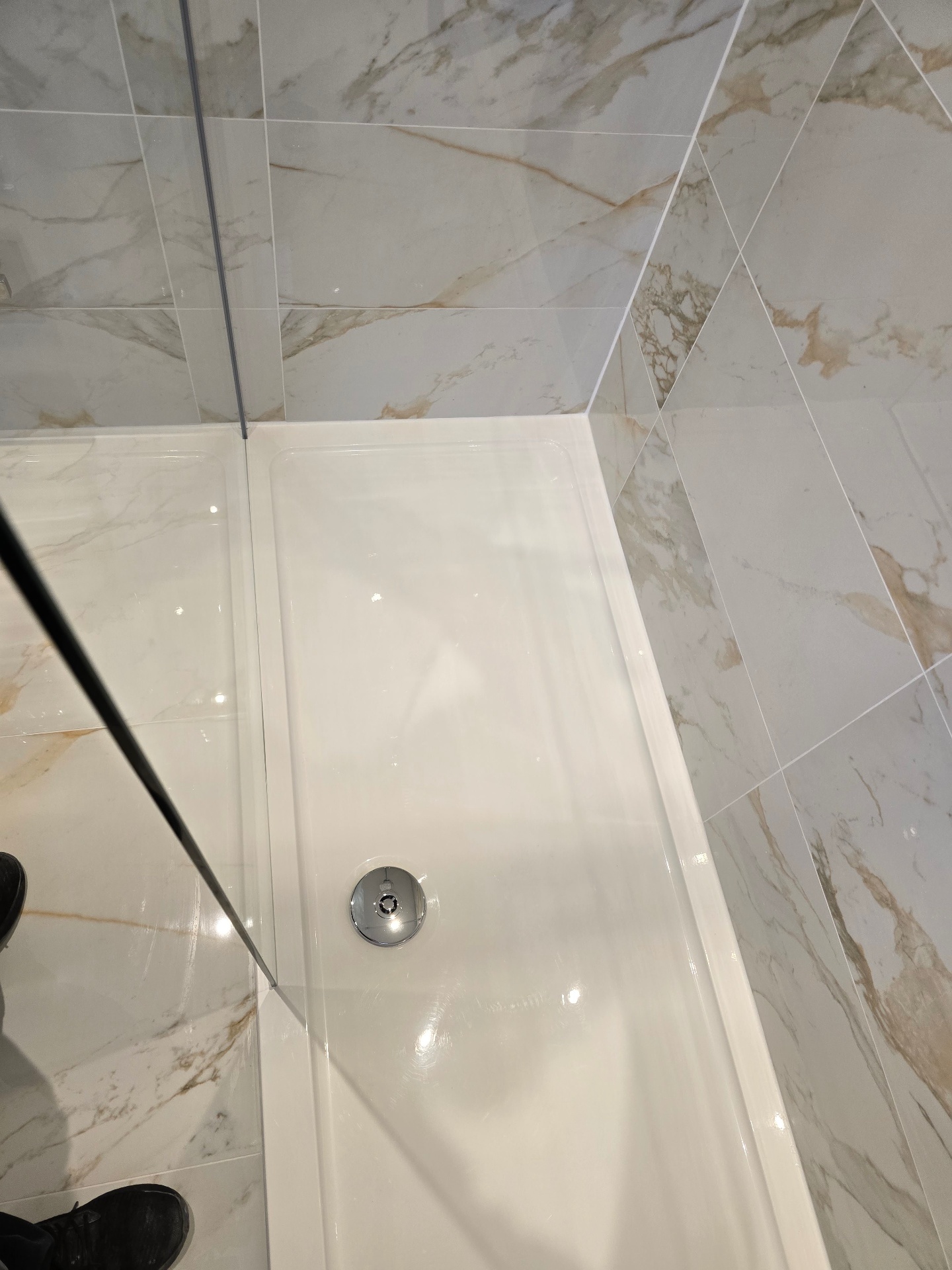
Recent Wet Room Installation Tamworth Projects
Every photo below was taken in a genuine client's home after completion — supplied and installed by our in-house Blue Sky team.
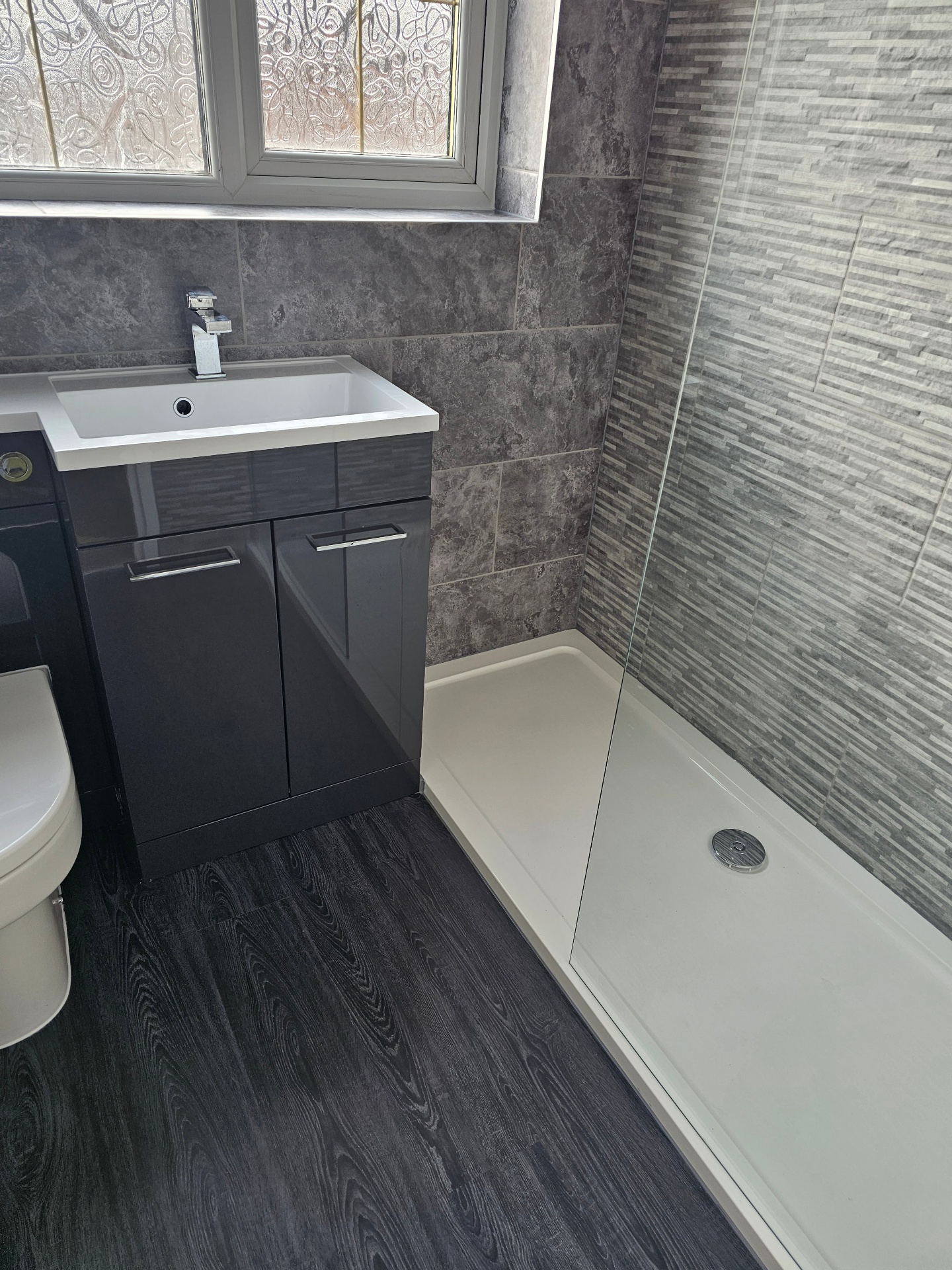
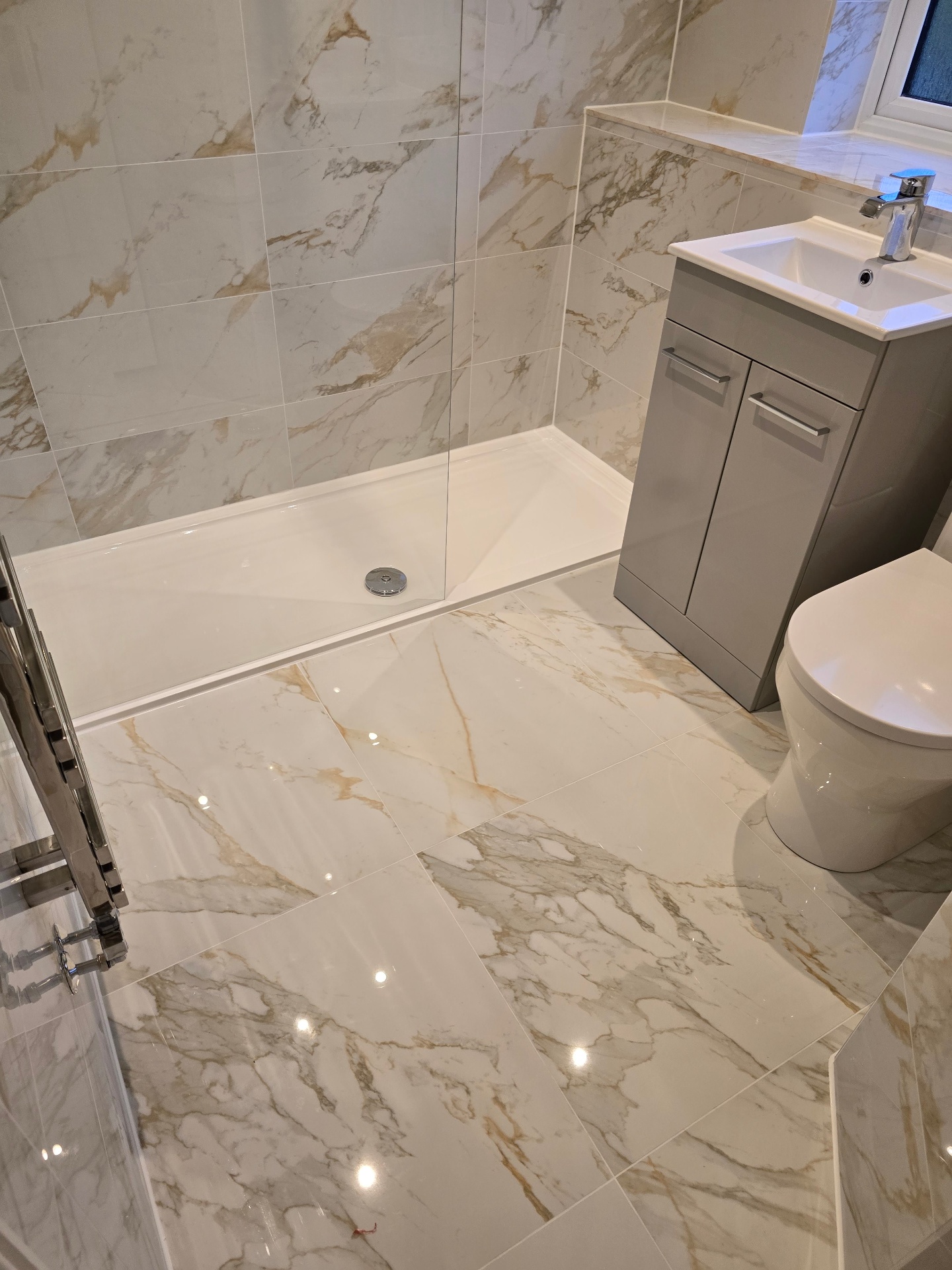
What Happens When a Wet Room Is Installed Incorrectly
A wet room that leaks is one of the most destructive failures in domestic construction. Water penetrating through an inadequately tanked floor saturates joists, degrades plasterboard on ceilings below, and creates conditions for extensive mould growth — often invisible until structural damage is advanced.
The most common installation errors include insufficient floor gradient (water pools instead of draining), incomplete tanking (corners and pipe penetrations left unsealed), incorrect tile adhesive (standard adhesive fails in permanently wet conditions), and poorly positioned drains (too far from the shower to capture runoff effectively).
Many general bathroom fitters attempt wet rooms without the specialist knowledge required. They apply basic silicone sealant instead of full membrane tanking, use standard floor tiles without adequate slip resistance, and skip the gradient-forming boards that create the necessary fall to drain.
Remedial work on a failed wet room typically costs more than the original installation. The entire floor must be stripped, dried, inspected for structural damage, and rebuilt with correct waterproofing. In severe cases, ceiling replacement and joist treatment in the room below are also required.
Our Process
How We Deliver Results,
Step by Step
Survey & Assessment
We assess your floor structure (timber or concrete), drainage routes, and room dimensions to confirm wet room suitability and design options.
Design & Specification
We create a detailed layout including drain position, gradient direction, glass panel configuration, and product selections.
Floor Preparation
Gradient-forming boards are installed to create the precise fall to drain. On timber floors, structural reinforcement is added where required.
Full Tanking
The entire wet room is waterproofed using a liquid-applied membrane system with reinforced tape at joints, corners, and pipe penetrations.
Tiling & Fitting
Anti-slip tiles are laid with flexible, waterproof adhesive and grout. The drain, shower fittings, glass panels, and all fixtures are installed.
Testing & Handover
We flood-test the completed wet room, verify drainage performance, and hand over with full warranty documentation.
Why It Matters
What You Gain When You
Work With Us
Level-Access Showering
No step, no tray, no barrier. Walk straight in — ideal for all ages and essential for wheelchair users or those with reduced mobility.
Maximised Floor Space
Without a shower enclosure taking up room, the entire bathroom feels larger and more open — particularly valuable in compact ensuites.
Lifetime Waterproofing
Professional tanking systems create a continuous waterproof membrane across the entire room — not just the shower area. This protects your home's structure indefinitely.
Easy Maintenance
Fewer joints, no shower tray to discolour, and no enclosure frames to clean. A wet room is simpler to maintain than a traditional shower.
Increased Property Value
Wet rooms are a sought-after feature in modern homes. A well-installed wet room adds genuine appeal and value to your property.
Design Flexibility
From large-format porcelain to natural stone mosaics, a wet room gives you freedom to create a continuous visual flow across floors and walls.
Wet Room Construction: Materials, Methods & Specifications
Wet room construction begins with the subfloor. On concrete floors, the surface is prepared and levelled before gradient-forming screeds or pre-formed boards are laid. On timber floors, we assess joist spacing, depth, and condition, then install reinforcement boards (typically 22mm moisture-resistant plywood) to eliminate flex before applying gradient formers.
The gradient is critical. Building Regulations require a minimum 1:80 fall (12.5mm per metre) to the drain point. We use pre-formed polystyrene gradient boards that provide a consistent, factory-accurate fall — far superior to hand-screeded gradients that can develop low spots and pooling.
Tanking (waterproofing) uses liquid-applied polyurethane or acrylic membranes painted onto all surfaces in multiple coats. Every corner, pipe penetration, and drain connection is sealed with pre-formed membrane components — bandage tape for corners, pipe collars for supply and waste connections, and drain flanges that bond directly to the membrane layer.
Drains for wet rooms are available in two main types: linear (channel) drains and point (centre) drains. Linear drains allow a single-direction gradient and create a clean, contemporary appearance. Point drains require a four-way fall but work well in smaller rooms. We install both types with adjustable-height frames for precise alignment with the finished tile surface.
Tile selection for wet rooms must account for slip resistance. We recommend tiles rated R10 or R11 on the DIN 51130 scale for wet room floors. Smaller tiles (such as mosaics) provide more grout lines and therefore more grip, but large-format tiles can also be used with appropriate surface textures.
Adhesives and grouts in wet rooms must be flexible and permanently waterproof. We use C2 TE S1/S2 rated adhesives (flexible, non-slip, extended working time) and epoxy or polymer-modified grouts that resist water penetration and mould growth.
Glass panels and screens in wet rooms are typically 8mm or 10mm toughened safety glass, fixed with stainless steel or chrome-plated brackets. We install frameless panels for a minimal aesthetic or partially framed options for additional stability in larger openings.
We install wet rooms for homeowners across Tamworth, Lichfield, Rugeley, Swadlincote, Burton-on-Trent, Sutton Coldfield, Atherstone, Nuneaton, Birmingham, Cannock, Walsall, Coalville, Hinckley, Derby, and West Bromwich.
Related Services
Frequently Asked Questions
Wet Room Installation Tamworth — Your Questions Answered
Client Testimonials
Trusted by Homeowners
Across the Midlands
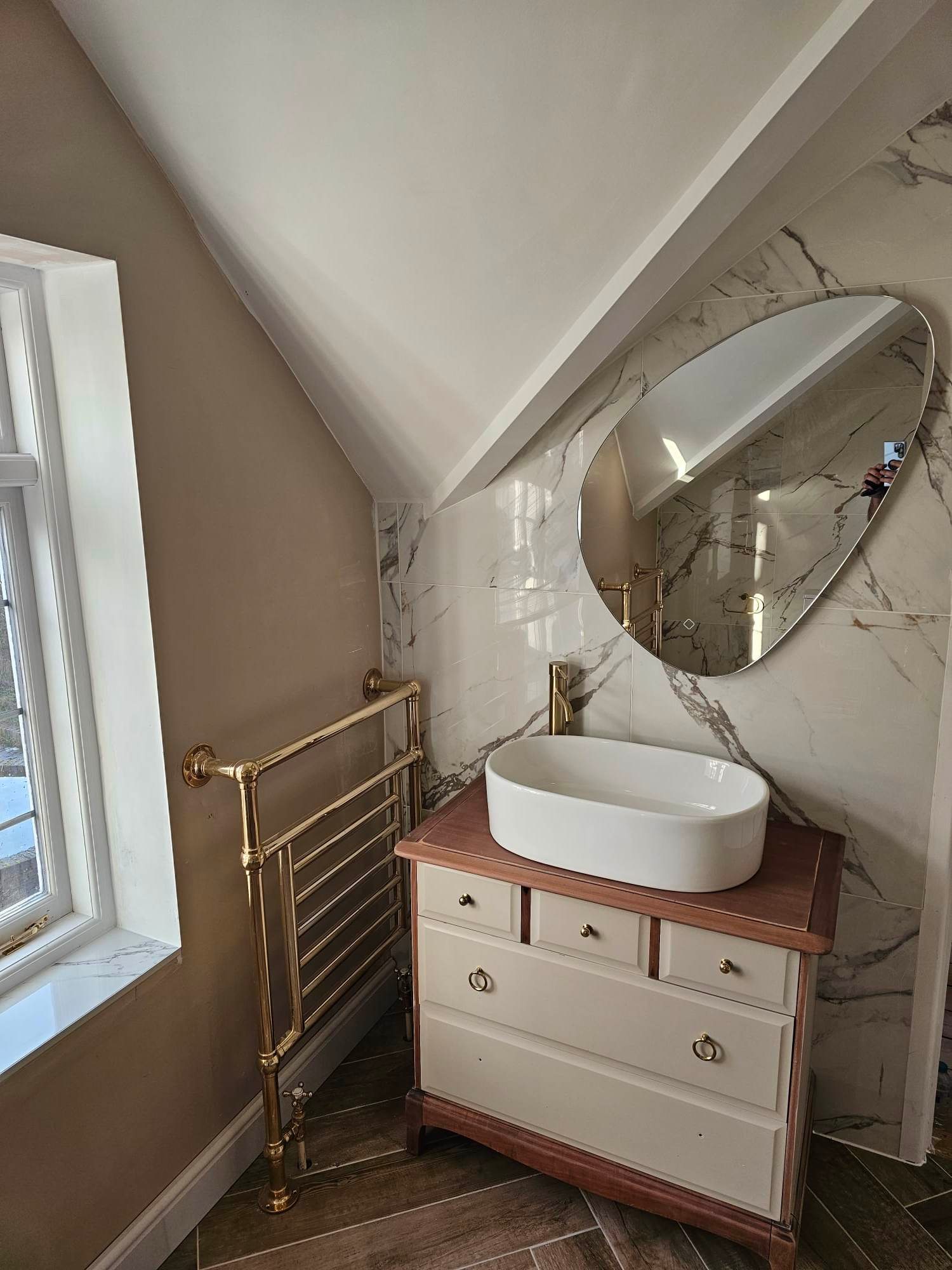
Ready for a Wet Room That Stays Watertight for Life?
Book your free survey and design consultation. We will assess your space, discuss your options, and provide a clear, no-obligation quote.